
Shop Figure Skates
-
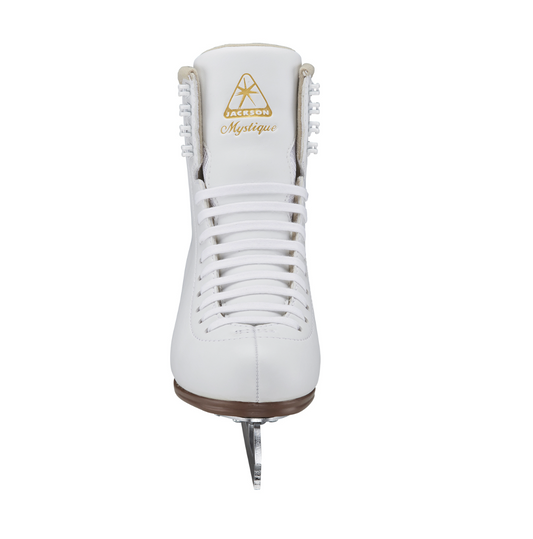
Jackson Ultima Mystique Figure Skates - Women's
MystiqueRegular price $224.95 USDRegular price -
Riedell Ruby Figure Skate - Girls
Regular price $149.99 USDRegular price -
Riedell Ruby Figure Skate - Women's
Regular price $149.99 USDRegular price -
Riedell Topaz Figure Skate - Women's
Regular price $219.00 USDRegular price -
Riedell Topaz Figure Skate - Girls
Regular price $219.00 USDRegular price -
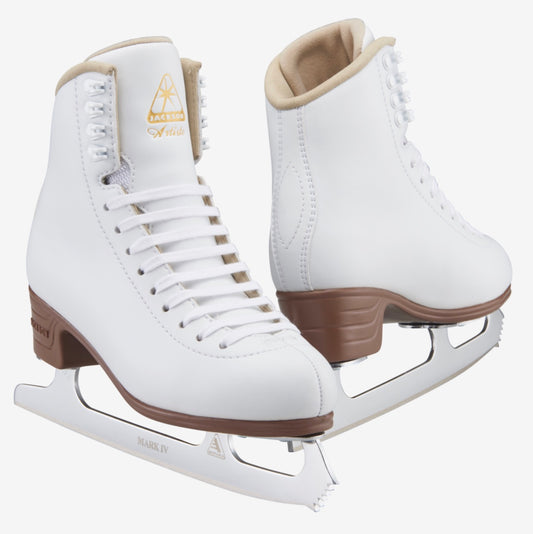
Jackson Ultima Artiste Figure Skates - Women's
ArtisteRegular price $279.95 USDRegular price -
Riedell Crystal Figure Skate - Women's
Regular price $275.00 USDRegular price -
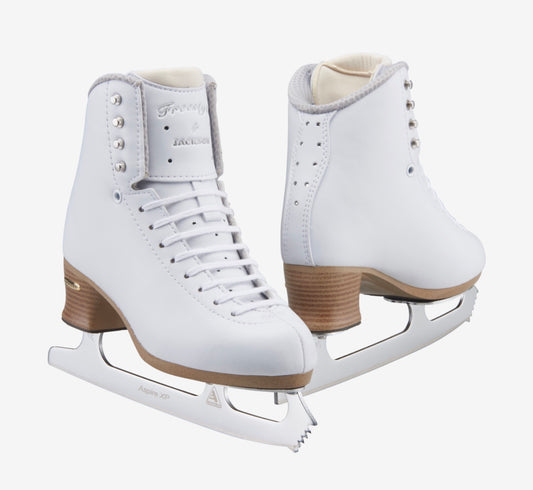
Jackson Ultima Freestyle Figure Skates - Women's
FreestyleRegular price $479.95 USDRegular price





Know Your Gear
Understanding your equipment is vital for performance and safety. Learn about boot selection, blade maintenance, customization, and proper care.
Boot Selection & Fitting
How do I choose the right brand of skate?
There is no single "best" brand, only the best brand for your foot shape. Different manufacturers prioritize different foot geometries:
- Jackson: Inverted triangle (wide toe, narrow heel) — excellent support for wider forefoot anatomy.
- Riedell: Elongated rectangle (tapered, narrow toes) — known for precision and consistent sizing.
- Edea: Narrow to medium — lightweight memory foam construction and innovative blade mounting systems.
What is "boot stiffness" and why does it matter?
Boot stiffness measures lateral support and resistance to flex during skating. Proper stiffness is critical:
- Under-booting: Compromises ankle support during jumps and stops, stressing ankle ligaments and risking sprains.
- Over-booting: Prevents necessary knee bend, causing overcompensation and poor edge control.
- Adult skaters: Standard stiffness is calibrated for ~110 lb athletes. Heavier skaters typically need higher skill-level boots for proper support.
How do I know when my boots are "dead" or broken down?
- Deep creases around the ankle that don't smooth out when relaxed
- Spongy or mushy feeling when bending knees (compressed padding)
- Boot easily folds or collapses when pressed on the sides
- Loss of ankle support when standing
Skating in dead boots drastically increases injury risk. When you notice these signs, invest in a new pair.
Can I break in my skates by walking in them at home?
No. Walking uses a heel-to-toe motion different from ice stroking and can crease the boot prematurely in incorrect locations. Break them in through stationary weight-bearing and short ice sessions (15–20 minutes) so materials conform naturally without damaging structural support.
Blade Mechanics & Maintenance
What makes a skating blade unique?
Ice skate blades have a concave groove called the "hollow" that creates two distinct edges (inside and outside). Figure skating blades feature:
- Inside and outside edges: The two contact points created by the hollow
- Rocker: A subtle longitudinal curve allowing smooth transitions between edges
- Toe picks: Small teeth at the front for jumping and transitions (not found on hockey blades)
How often should I sharpen my skates?
Sharpening frequency is measured by ice time, not weeks. Figure skaters typically sharpen every 20–30 hours due to continuous, sweeping edge work. Frequency increases with warmer ice, heavier body mass, shallower blade hollows, and outdoor skating (due to debris).
How do I prevent my blades from rusting?
High-carbon steel blades are susceptible to oxidation. Follow this protocol:
- Dry immediately after skating with a microfiber cloth
- Store in moisture-wicking cloth covers (not hard plastic guards)
- Avoid storing near heat sources
- Inspect weekly for rust spots and address immediately
Stainless vs. carbon steel blades?
Carbon steel: Holds a sharper edge longer and allows precise edge work. Requires strict rust prevention. The industry standard for performance.
Stainless steel: Rust-resistant with minimal maintenance. Cannot hold as sharp an edge and dulls faster. Typically found on recreational or beginner blades.
Customization & Advanced Technology
What is "heat molding"?
Modern boots integrate thermo-formable polymers customized to your foot shape. A technician heats the boots to precise specifications (typically 165–200°F), and you wear them while standing stationary. The padding maps perfectly to your foot's unique shape, reducing break-in from weeks to days and creating custom support.
Important: Never attempt heat molding at home — uncontrolled heat permanently damages boot structure, adhesives, and materials.
What is a "temporary mount" for blades?
A temporary mount uses only a few screws in the blade's slotted holes, allowing you to test blade alignment over multiple ice sessions. If you find yourself leaning on an edge or experiencing asymmetric pressure, the technician can shift the blade laterally (inside/outside) or fore/aft to adjust your center of pressure. Once alignment is confirmed, the technician performs a permanent, heavy-duty mount with all screws and typically permanent adhesive.
Safety & Longevity
Is protective gear necessary?
Yes, especially during learning phases. Protection includes:
- Head protection: Helmets for children; adults benefit from crash bands protecting the back of the head
- Wrist guards: Prevent hyperextensions and fractures (wrist injuries account for ~25% of skating injuries)
- Lower body: Knee pads and padded crash pants protect the tailbone, hips, and lower back during jumps
How do I care for my boots after skating?
- Pull the tongue forward and loosen laces to allow deep airflow
- Never use artificial heat (hair dryers, radiators) as it strips essential oils from leather
- For leather-soled boots, periodically apply beeswax-based waterproofing to prevent moisture damage
- Proper care prevents rot around blade mounting screws, a leading cause of boot failure
Experience The Ice Box Difference
Visit The Ice Box today and discover why Los Angeles figure skaters trust us for expert fitting, professional service, and dependable equipment guidance at every level of the sport.